Why tractor is called tractor
The Latin is certain. The popular origin story is not, and the difference is worth a page.
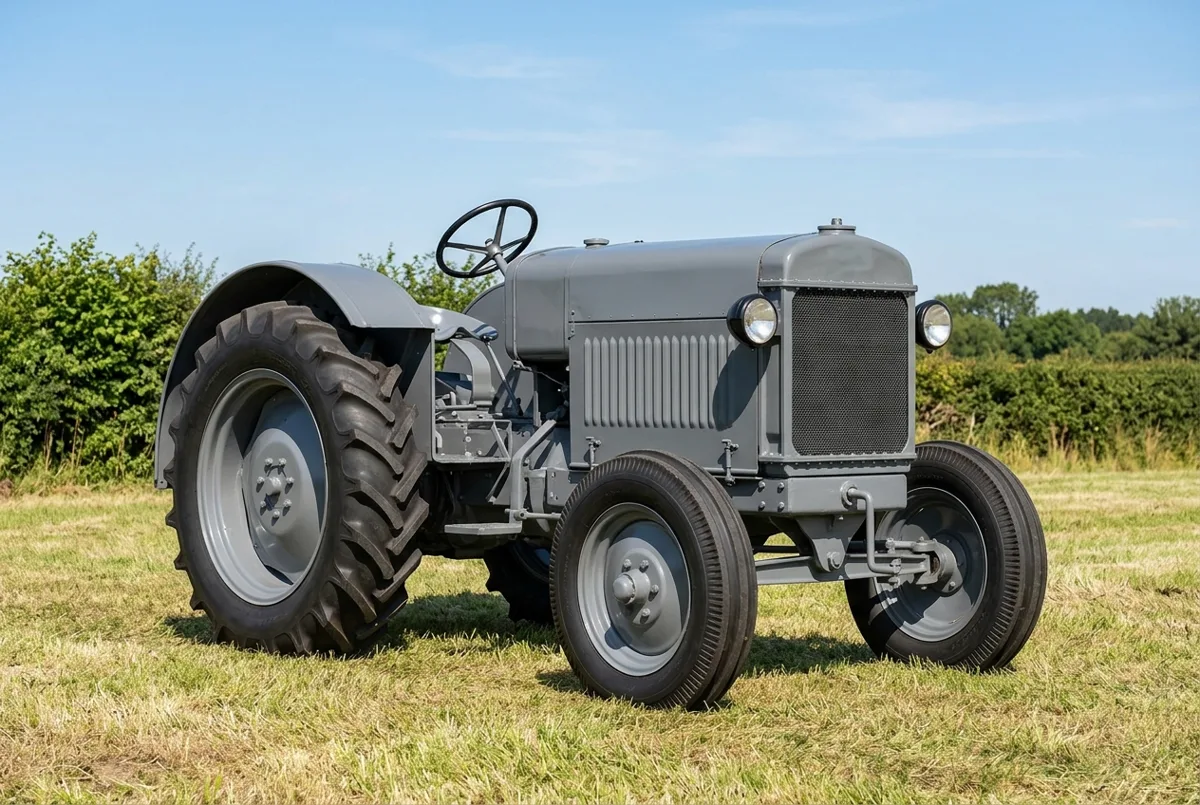
The J.I. Case 12-25, one of the machines discussed below.
A tractor is a thing that pulls, and the word says so in Latin. Trahere is to pull or to draw; tractor is the agent noun — the puller. The same root gives traction, tractable, attract, extract and contract, all of them about drawing something one way or another.
That part is not in dispute. What follows it is.
Who actually coined the word?
Not the people usually credited, and the correction is more interesting than the story.
The popular account is that Hart-Parr’s sales manager, W. H. Williams, invented the word for an advertisement because “gasoline traction engine” was too long for a headline. It is repeated everywhere, and the company was happy to be known as the founders of the tractor industry.
The difficulty is that the word was already in use. The first recorded use meaning an engine or vehicle for pulling wagons or ploughs dates to 1896, from the earlier traction motor, which is recorded from 1859. Hart-Parr’s advertisement came a decade later. Sources also disagree about when: some date it to 1906, others to a June 1907 advertisement.
So the honest statement is narrower than the famous one. Hart-Parr popularised the word; they did not coin it. A company making the word stick is a genuine achievement in its own right — most coinages die — but it is not the same claim, and a site built on sourcing should not repeat the version it cannot stand up.
What were they called before?
Traction engines, and the name tells you what changed.
A portable engine was a steam engine on wheels that had to be towed into position and then stood still, driving machinery by belt. A traction engine could move itself, which was the advance. Both were steam, enormous, and suited to contract threshing rather than to a farm’s daily work.
What arrived in the 1900s was smaller, internal-combustion, and meant to be owned by one farm rather than hired by many. “Traction engine” carried the wrong associations for it, which is exactly the problem a sales department is paid to solve.
From our database
The oldest machines we publish and what they were called. Queried 2 October 2026. We hold 11 published models that entered production before 1920 and 29 before 1930.
- J.I. Case 12-25, 1913
- International Harvester 8-16, 1914
- International Harvester Titan 10-20, 1915
- International Harvester Mogul 10-20, 1916
- J.I. Case 8-18, 1916
- Fordson MOM, 1917
None of those is a model name in the modern sense. They are power ratings. The convention of the period was to name a machine by two numbers — its drawbar horsepower and its belt horsepower — so a 12-25 advertised what it could pull and what it could drive, in that order. The machine was described by what it did, which is the same instinct that produced the word tractor.
One honest caveat, and it is the sort of thing this site exists to notice. Our own records do not consistently say which of the two numbers they hold. The claimed figure we store for the J.I. Case 12-25 and the International Harvester Titan 10-20 matches their second number, and the one we store for the International Harvester 8-16 matches its first. The sources give a power figure without always naming the quantity, and where that happens we record what was printed rather than deciding which it must have been.
What replaced the number pairs?
Names, then numbers again, then numbers that mean something else entirely.
The two-number convention died once tractors stopped being bought primarily on their rated output. What came next was the model name — the Fordson, the Farmall, the Ferguson TE-20 — where the letters encode a specification and the buyer is expected to know the code rather than read horsepower off the bonnet.
Then the numbers returned, and this is where it gets confusing for anyone reading old advertisements against new ones. A modern designation is usually a series number plus a figure loosely related to power: a 6120 is a 6-series of about 120 horsepower, and a 7810 is a 7-series. But “loosely” is doing real work in that sentence. The figure is a marketing position rather than a measurement, it usually refers to the engine rather than the shaft, and makers have been known to keep a number through a specification change.
That is a step backwards in honesty from a bonnet that said 12-25. A machine advertising two measured quantities tells you more than one advertising a model family, which is why this site publishes the laboratory figure next to the claimed one wherever a laboratory produced it — see the PTO horsepower list for every machine where one exists.
The irony is that the oldest machines in our records are, in this one respect, the most transparently named things we hold.
Why does the distinction matter?
Because it is the same distinction the whole site is built on.
A drawbar figure and a belt figure are different quantities measured at different places on the machine, and a century ago the naming convention put both on the bonnet precisely because buyers knew they were different. The modern equivalent — a claimed engine figure against a measured figure at the power take-off — is covered in why PTO horsepower is lower than engine horsepower, and the gap between them averages 11.4% across the machines where we hold both.
The 1910s were in some ways more honest about this than the 1990s were. Two numbers on the side of a machine is a specification. One number in a brochure is a claim.
Does the word mean the same thing everywhere?
Mostly, with one trap worth knowing.
In American and British usage a tractor is the farm machine. In road haulage a “tractor unit” is the powered front half of an articulated lorry, which is also a thing that pulls and is also correctly named. That is why a search for a “tractor protection valve” returns air-brake components rather than anything agricultural — it belongs to the lorry.
Elsewhere the Latin travelled directly: Traktor in German, trattore in Italian, tracteur in French, all from the same root and all meaning the same machine. The word spread faster than the machines did, which is usually how it goes: a name travels on paper and a tractor has to be shipped.
Browse the machines themselves, including the earliest ones, in the tractor index, or see how do tractors work for what all that pulling actually involves.
Common questions
- What does the word tractor mean?
- It comes from the Latin trahere, to pull, through the Latin agent noun tractor — a thing that pulls. The English word in its modern sense derives from the earlier term traction motor, recorded from 1859.
- Did Hart-Parr invent the word tractor?
- No. The word is recorded in its modern sense from 1896, and had been used earlier still in patent language. Hart-Parr's sales department popularised it, which is a real achievement and a different claim from coining it.
- What were tractors called before?
- Traction engines, and before that portable engines. Early machines were often named by their power ratings rather than by a model name — the oldest tractor in our records is called the 12-25.